
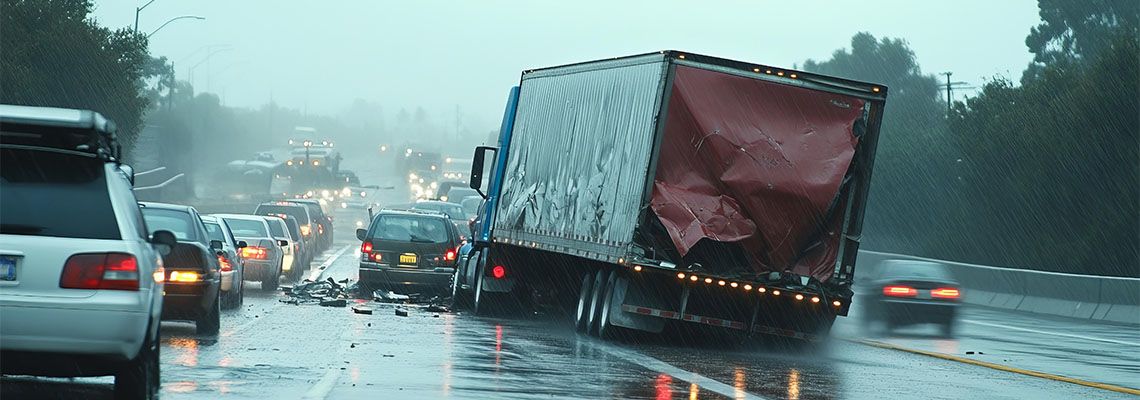
What Makes Truck Accident Claims Different from Car Accident Cases?
Accidents are always disruptive, regardless of the vehicle involved, but truck accident claims often differ significantly from car accident cases. Recognizing these differences can help you make smarter decisions early, while the incident details are still being recorded.
Truck accidents can involve commercial rules, business records, and multiple insurance policies, all while you are trying to focus on medical care, missed work, and day-to-day responsibilities. Those added layers do not automatically change who is right or wrong, but they do change what has to be proven, who may be responsible, and how quickly key evidence can disappear.
At Goldberg, Goldberg & Maloney, we advocate for injured individuals in West Chester, Pennsylvania, and nearby areas, including Chester, Montgomery, Delaware, Bucks, and Philadelphia counties. We handle cases involving serious vehicle collisions, including those involving commercial trucks.
Why Truck Claims Involve More Responsible Parties
In many car accident cases, the claim focuses on a single driver and a single insurance carrier. Truck accident claims can involve several people and businesses, each with its own insurer, documentation, and version of events. Those issues often point to more than one potentially responsible party, such as:
Truck driver conduct: The claim may examine distraction, fatigue, impairment, speed, following distance, and other driving practices related to safe operation.
Motor carrier responsibility: A trucking company may face allegations related to hiring, supervision, dispatch pressure, or policies that affect how trucks are operated.
Maintenance and repair providers: If brakes, tires, lights, or other components fail, repair shop records and workmanship could be critical to the case.
Shipper and cargo handling issues: Improper loading, shifting cargo, or overweight conditions can contribute to loss of control and may involve separate companies.
Once the list of potentially responsible parties expands, the claim typically requires additional document requests, greater insurance coordination, and a clearer plan for preserving evidence. .
Safety Rules and Business Records Add Key Evidence
Car accident cases often involve photos, witness statements, medical records, and the police report. Truck accident claims may include all of that, plus business records tied to how the truck was operated and whether safety requirements were followed. Some of the records that may matter in a truck case include:
Driver logs and duty status materials: These records can reveal work and rest patterns that may be compared with dispatch schedules or other relevant documents.
Vehicle inspection and maintenance records: These can help clarify whether known issues were addressed and whether inspections were performed as required.
Dispatch and communication records: Messages, route instructions, and delivery schedules can help explain timing pressure and decision-making.
Onboard electronic data: Some trucks record speed, braking, and other operational details that can support or challenge a crash narrative.
When those records align with physical evidence from the scene, they can help clarify how the crash unfolded and whether preventable choices contributed. .
Crash Forces Often Change The Medical Proof Needed
Many car accident injuries heal with time, therapy, and follow-up care, but the injury pattern in a truck crash can be more severe because of vehicle size and impact dynamics. That can mean longer treatment, more diagnostic testing, and more questions about whether symptoms are tied to the crash or to a prior condition. It also means the claim may require clearer medical storytelling so the insurer or jury understands the full arc of care and its limitations.
Even when liability seems straightforward, commercial insurers often scrutinize treatment timelines and gaps in care. If you delay evaluation, miss follow-ups, or stop treatment early, the defense may argue the injury was minor or unrelated.
Insurance Coverage Structures Can Be Different in Truck Cases
In a typical car accident claim, you may deal with one liability policy and, sometimes, your own coverage for medical payments or underinsured drivers. Truck accident claims often involve multiple insurance policies covering various layers of risk, with different insurers managing different aspects of the claim. This can influence settlement negotiations, timelines, and the documentation needed to verify coverage.
Coverage questions can also arise when a driver is classified as an employee or an independent contractor, or when a trailer is owned by a different business than the one that owns the tractor. Those relationships can lead to disputes over who had control, who provided the equipment, and which policy applies first.
Time-Sensitive Evidence and Early Preservation Matter More
In a car accident case, you might have plenty of time to gather photos, repair estimates, and medical records. Early action is often less about rushing and more about preventing preventable loss. Steps that are commonly discussed early in truck cases include:
Preserving the vehicles and components: When a mechanical issue is suspected, the truck, trailer, and critical components may need to be preserved for inspection.
Sending preservation letters: Written notices can formally require that documents, electronic data, and related materials be preserved and remain unaltered for legal review.
Collecting scene evidence quickly: Skid marks, debris fields, signage visibility, and roadway conditions can change within days.
Identifying all witnesses and recordings: Nearby businesses, dash cameras, and roadway cameras may have video that is deleted on short retention cycles.
When evidence is preserved early, it becomes easier to evaluate liability, respond to insurer arguments, and avoid surprises later in the case. That groundwork also makes the legal path clearer, because the final distinction between truck and car cases often turns on how disputes are defended and how fault is argued.
Claim Strategy Can Shift Because Defenses Are Different
Commercial defendants and their insurers often respond quickly and may raise defenses to reduce fault or limit damages. You may see arguments about sudden emergencies, unavoidable roadway hazards, pre-existing medical conditions, or a claim that another driver caused the chain reaction.
Deadlines, procedural rules, and fault standards still apply in truck cases, and they can affect your options if you wait too long. Our attorneys can help you determine when a settlement discussion is appropriate and when a lawsuit is necessary to obtain records or testimony.
Contact Truck Accident Attorneys Today
If you were hurt in a truck crash and want help evaluating what makes your claim different from a standard car accident case, you can reach out to us to discuss next steps. At Goldberg, Goldberg & Maloney, we serve clients throughout Pennsylvania, including Chester County, Montgomery County, Delaware County, Bucks County, and Philadelphia County. Contact our firm to schedule a consultation and figure out your next steps.